Is Your Brand Actually Working? Run This Audit to Find Out
Before every client engagement, I need to figure out what's actually broken.
Why? Because the problem you think you have is usually just a symptom.
A business will say "we can't grow our followers" or "our email list keeps dropping."
Translation: something feels off, but we don’t know what and we’re blaming the algorithm for emotional support.
They’ll say “we just need more sales” when the real issue is there’s no clear reason to choose them. They’ll hire a designer to refresh their visual identity when what they actually need is to figure out their positioning first.
The problem isn't effort. It's diagnosis. You’re doing CPR on the wrong patient. You're treating the wrong thing.
Or you're treating a symptom when the actual problem is three layers deeper.
Before you refresh your brand colors or invest in new photography, run an audit. Figure out what's actually broken. Then fix that.
(If you’re thinking “cool story bro, now give me the damn recipe,” this is the part you’re looking for: DOWNLOAD THE AUDIT. If you want the recipe plus the cooking notes that actually matter, keep reading.)
By the way, if you haven't read my piece on why strong brand strategy starts with a strong point of view, start there. That article explains the philosophy. This one gives you the practical framework to assess where you actually stand.

Most brand audits start in the wrong place
They start with execution, like social media performance, website conversion rates, email open rates. All useful metrics, sure. But they're outputs, not inputs.
If your foundation is broken, no amount of better content or prettier design will fix it. You’ll just be polishing a turd wobbly table.
That's why I built The POV-First Brand Audit—a framework that evaluates brands the way they're actually built, from the ground up. Foundation first. Then messaging, content, visuals, and experience. In that order.
Because if you don't know what you stand for, nothing else matters.
What is The POV-First Brand Audit?
Unlike traditional brand audits that focus on metrics and outputs (follower counts, engagement rates, conversion percentages), this approach starts with strategy. Specifically: whether your brand has a clear point of view, how consistently that POV shows up across all touchpoints, and where the gaps between strategy and execution actually are.
The framework evaluates five core areas in order:
Brand Foundation – Your POV, positioning, and team alignment on what you stand for
Messaging & Voice – Whether your brand sounds consistent, distinctive, and human across all channels
Content Strategy – If your content has clear themes, purpose, and ties back to your POV
Visual Identity – Whether your design is cohesive, intentional, and reflects your positioning
Engagement & Experience – If people are actually connecting with your brand or just scrolling past
Each area builds on the one before it. You can't have strong messaging without a clear POV. You can't have strategic content without consistent messaging. And you can't scale engagement if your foundation is missing. Simple in theory. Uncomfortable in practice.
Here's what you'll be evaluating and why each area matters:
1. Brand Foundation: Do You Have a Clear Point of View?
A brand foundation is your POV plus your positioning: what you believe, who you're for, and how you're different.
In the audit, you'll assess whether your POV is clear, documented, and consistent across your team, or if it's buried in your founder's head.
Ceremonia, a Latinx-founded clean haircare brand, doesn't just say they're "inclusive" or "natural." Their entire brand is rooted in a clear belief: that Latin hair care traditions have been overlooked and deserve to be elevated. You know exactly who they are and who they're for within seconds.
Here's one test: If I interviewed five people on your team separately, would they describe your brand the same way? If they're not aligned on what you actually stand for, your foundation is broken.

2. Brand Messaging & Voice: Does Your Brand Sound Like Someone Specific?
Brand voice is how your POV sounds when it speaks.
In the audit, you'll evaluate whether your voice is consistent and recognizable across all touchpoints, or if you’re running on professionally written “filler text” that technically says words but emotionally says nothing.
Fishwife, a canned seafood brand, has a voice that's sassy, specific, and unapologetic. Even their shipping notifications sound unmistakably like them. They're not trying to be "approachable but premium." They picked a lane and committed. And it works because the voice comes from a real POV about making tinned fish fun and accessible, not boring.
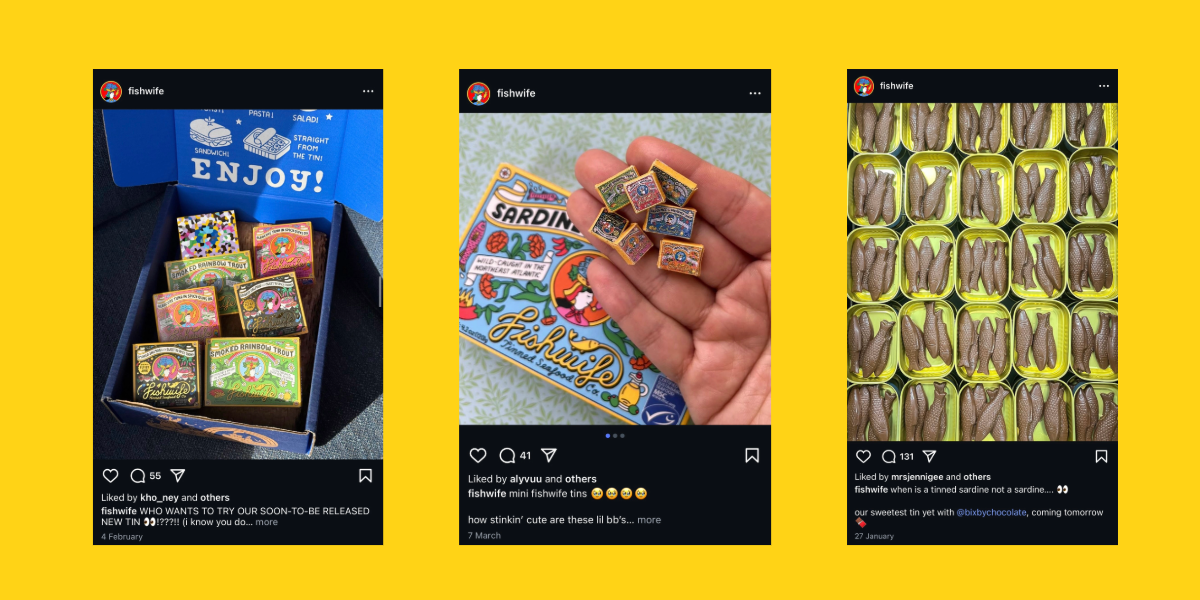
Voice isn't about sounding nice. It's about sounding like someone specific.
3. Content Strategy: Are You Building Toward Something or Just Posting?
Content strategy is the system that turns your POV into momentum.
In the audit, you'll evaluate whether your content has clear themes and purpose.
Content strategy means knowing why you're saying something, not just that you're saying it. It means having themes that ladder back to your POV. Knowing what each piece is supposed to accomplish. Building toward something, not just filling space.
Most brands post whatever feels right that day. Educational post Monday, promotional post Wednesday, trending audio Friday, then a cringey quote no one at the company actually believes. No connective tissue or cumulative effect. That’s when content feels scattered, with no reason for anyone to follow along.
4. Visual Identity: Do Your Visuals Reinforce or Contradict Your POV?
Your visual identity should be a translation of your POV, not just lipstick applied on top.
In the audit, you'll evaluate whether your design is cohesive and intentional.
Ghia, a non-alcoholic aperitif brand, has design so consistent it feels like a mood. From the bottle to the website to every Instagram post, it all belongs to one world—lush, analog, elegant, warm. You could spot a Ghia post in a crowded feed. That's not “this brand must spend a lot of marketing dollars”. That's intentional visual strategy rooted in their POV about bringing ritual and beauty back to drinking culture.
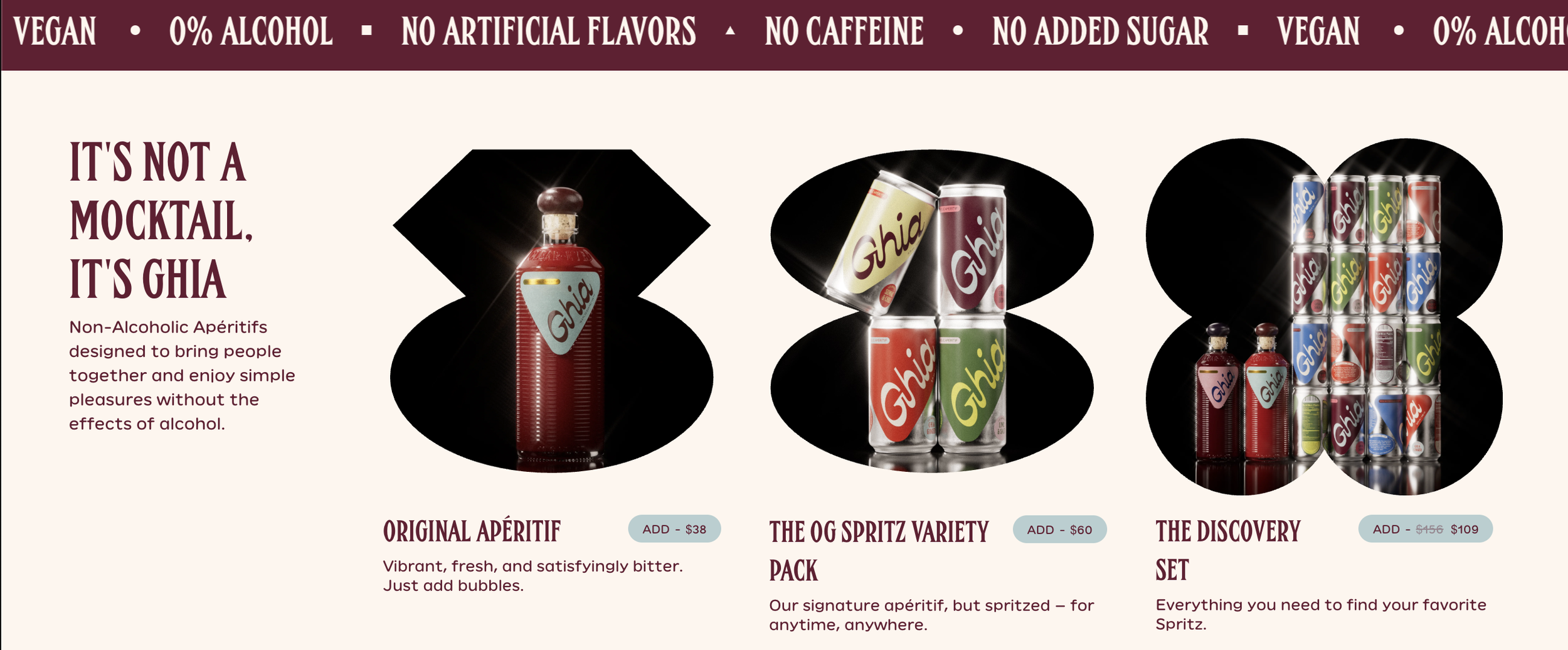
Your visuals either reinforce your POV or they contradict it.
I worked with a luxury resort client who kept saying they wanted to feel "elevated and exclusive," but their Instagram looked like...not that. Different fonts every post. Stock photos that could belong to any hotel. No cohesive aesthetic. The visuals were actively undermining the positioning.
The tell: If you change your color palette every few months because “it doesn't feel right”, the problem isn't the colors. The problem is you haven't figured out your POV yet, so nothing will feel right.
5. Engagement & Experience: Are People Actually Connecting With Your Brand?
Brand engagement isn't about reach or likes—it's about whether people remember you and care enough to come back.
In the audit, you'll assess whether your community is actively engaging or if you're just broadcasting to an audience that scrolls past.
I've worked with brands that had 50K followers and averaged 10 comments per post. High reach, zero connection. The digital equivalent of talking at a party and realizing no one is listening. The content was fine…polished, on-brand, consistent—but it didn't invite conversation. It just broadcasted.
When we rebuilt their engagement strategy around actual dialogue instead of announcements, the numbers shifted. Same follower count six months later, but 10x the replies. People weren't just liking and scrolling anymore. They were asking questions, tagging friends, coming back.
You can have thousands of followers and still be invisible if no one actually cares.
So what's actually broken?
That's what this exercise tells you.
The POV-First Brand Audit evaluates all five areas—foundation, messaging, content, visuals, experience—and tells you exactly where to focus your energy (and budget). Because if you don't know where the cracks are, you'll keep throwing money at the wrong problems and hoping the next hire fixes it.
It takes 10 minutes. And it'll save you months of fixing the wrong thing.
If your score is low (or if you're not sure how to fix what's broken), that's exactly what we do at TINY VOICE CO.
We help brands figure out what they actually stand for—then make sure it shows up everywhere, consistently, with conviction.